
AI and 3D Scanning: Innovation, Limitations, and the Importance of Digital Provenance
Artificial intelligence is rapidly reshaping nearly every creative and technical industry, and 3D is no exception. From text-to-3D experiments to automated mesh cleanup, AI-generated 3D models are becoming more visible, and more talked about. At Dockive, we believe it’s important to acknowledge these advancements while also clearly defining where AI fits responsibly within historical preservation and where it does not.
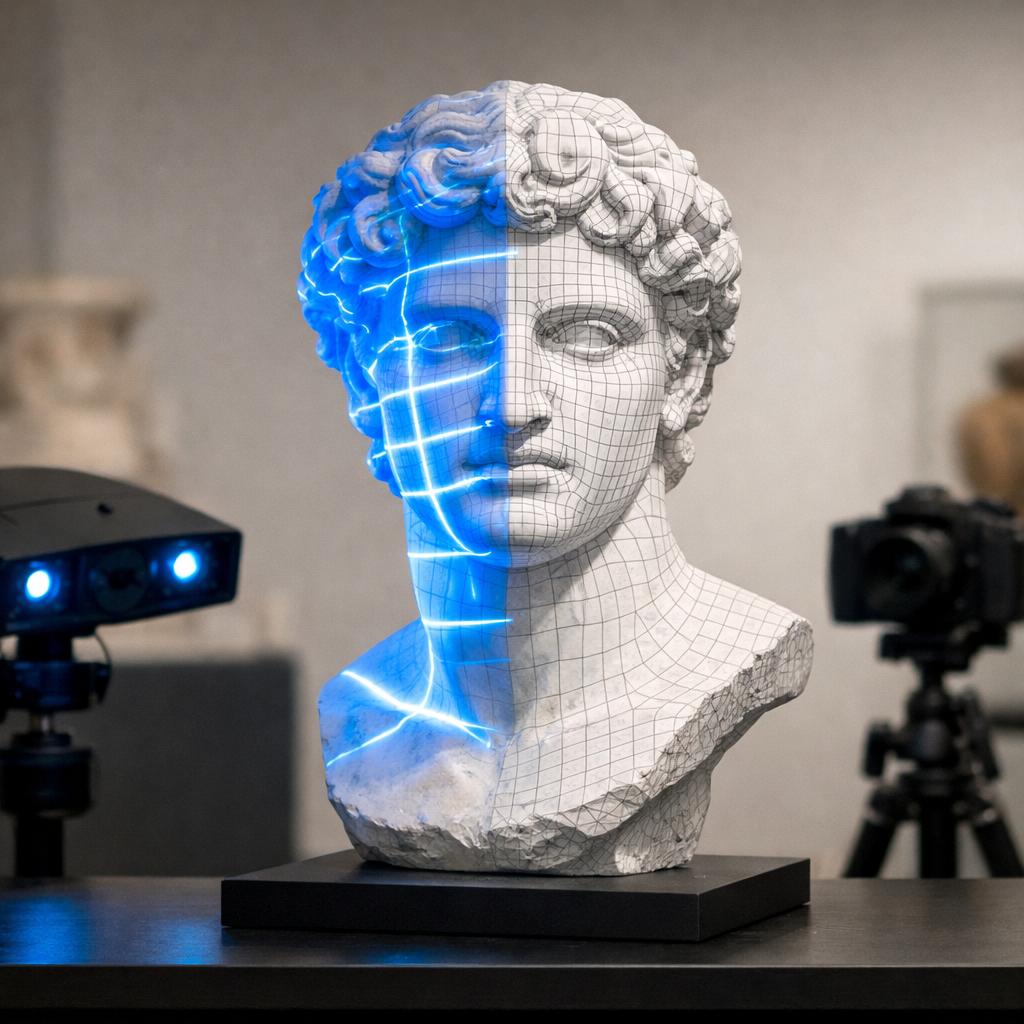
Why AI Is Entering the 3D Conversation
AI excels at identifying patterns, predicting geometry, and filling in gaps based on training data. In the 3D space, this has led to exciting developments such as faster mesh cleanup, automated alignment, and texture enhancement. These tools show real promise in supporting existing workflows, especially when working with large datasets.
But excitement should not be confused with readiness, especially when the goal is historical accuracy.
The Difference Between Measurement and Approximation
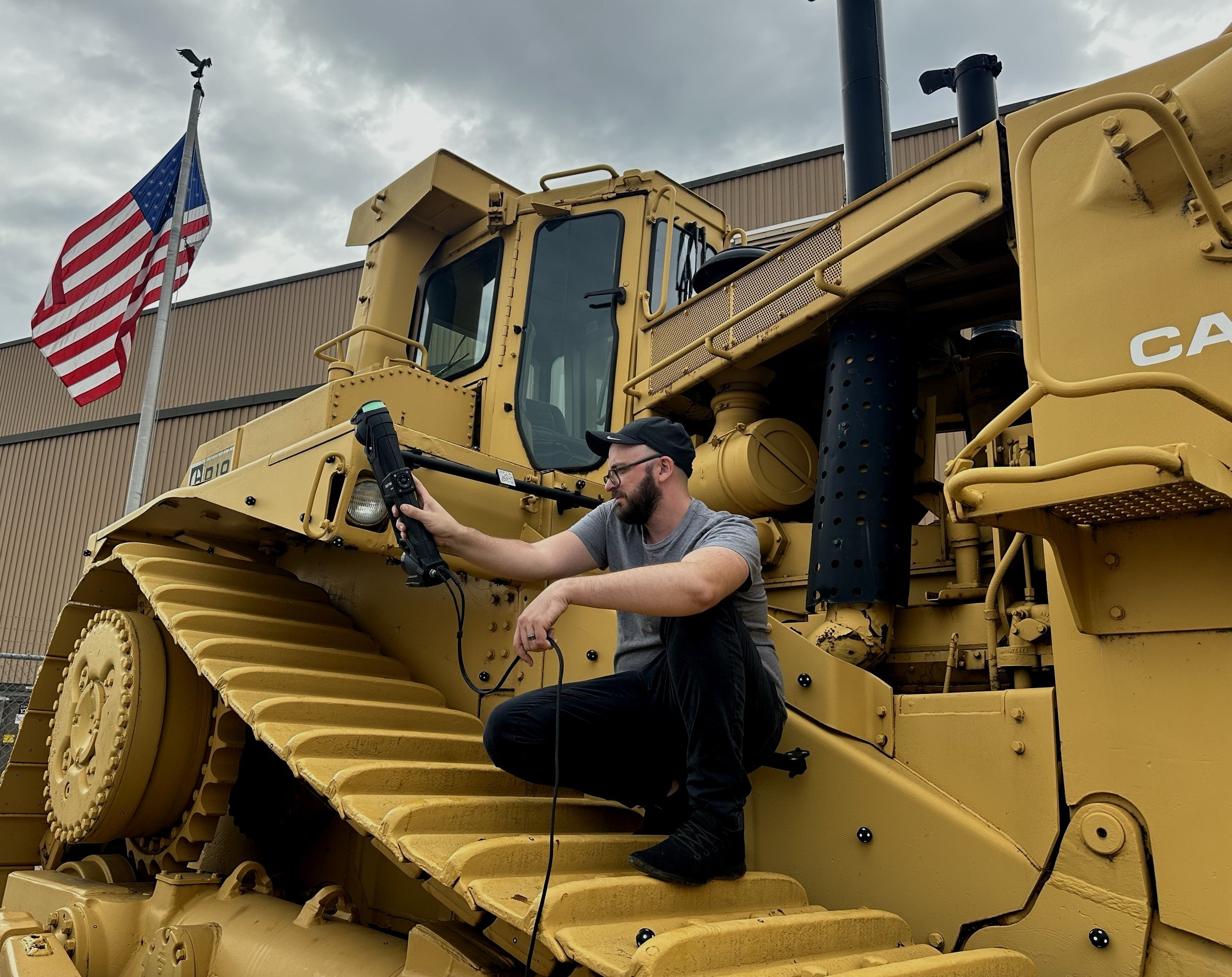
At its core, 3D scanning is about measured reality. Every scan Dockive produces is derived from real-world data captured directly from an object using calibrated hardware. Distances, surface variation, wear patterns, and material transitions are physically measured and documented.
AI-generated 3D models, by contrast, are approximations. They are created by algorithms trained on large datasets and produce results based on probability rather than direct measurement. While these models can look convincing, they cannot verify that they accurately represent a specific, real-world object.
This distinction is critical for museums, archives, and institutions that require verifiable authenticity.
Digital Provenance: Why It Matters
Digital provenance is the documented origin and lineage of a digital asset, how it was created, from what source, and using which methods. In historical preservation, provenance is everything.
A true 3D scan offers:
Traceable capture methods
Repeatable, measurable results
A clear link to the physical object
Long-term archival reliability
An AI-generated 3D model, however, is a black box. The training data is often unknown, the process cannot be audited, and the output cannot prove it represents a specific artifact. For historical preservation, this lack of transparency creates serious limitations.
Where AI Does Belong in 3D Preservation
AI is not the enemy of scanning, when used correctly, it can be a powerful assistant.
At Dockive, we view AI as a support tool, not a replacement. AI-driven processes can help:
Speed up certain post-processing steps
Assist in noise reduction and cleanup
Improve efficiency when handling large datasets
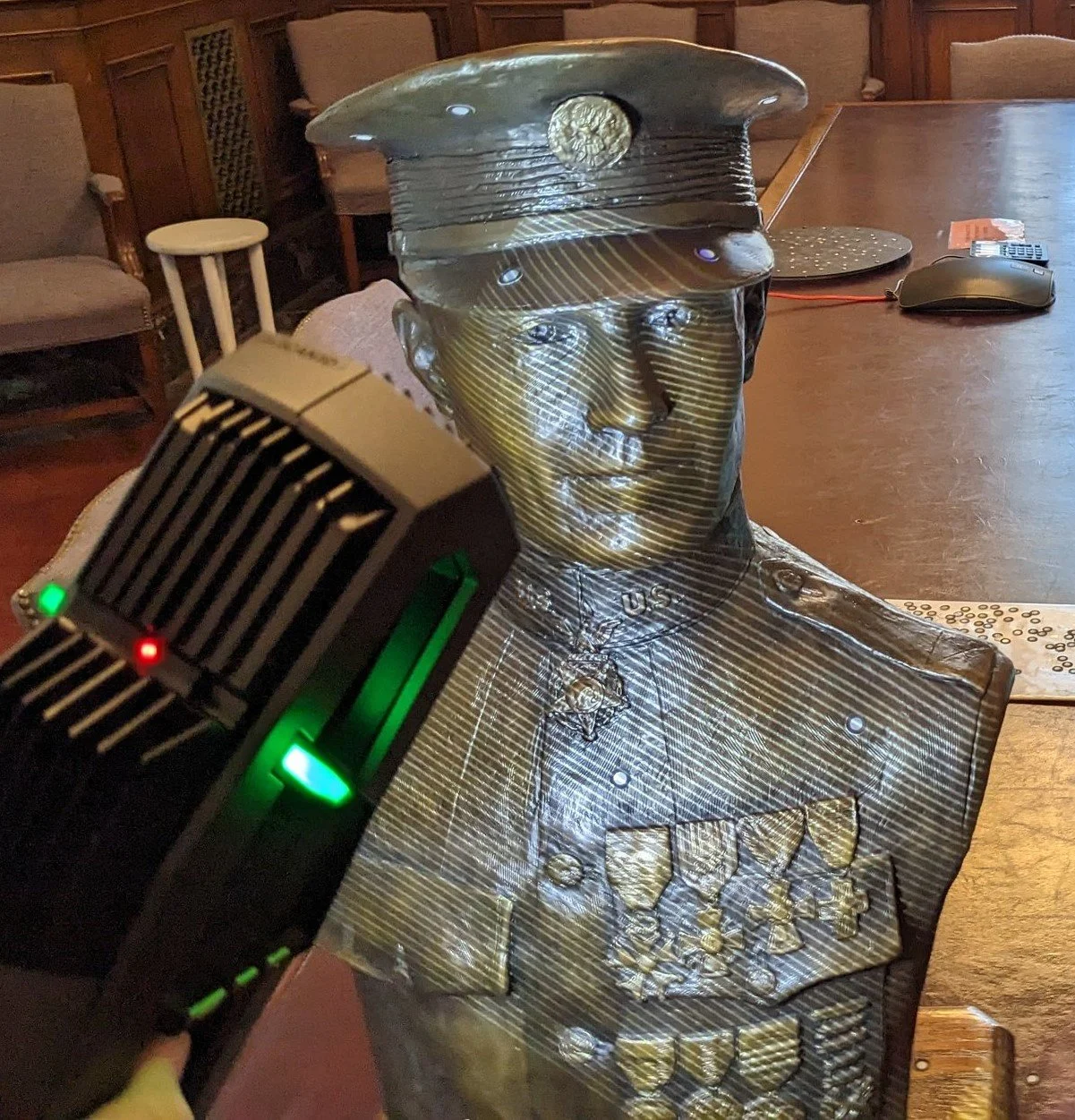
Crucially, these tools operate after authentic scan data has been captured. AI supports the workflow, but the foundation remains real-world measurement collected directly from the object.
Why Scanning Still Comes First
For cultural heritage, museums, and serious archival work, authenticity cannot be optional. A digital model must be more than visually convincing, it must be true.
3D scanning preserves:
Physical geometry exactly as it exists
Surface wear, aging, and craftsmanship
Details that AI cannot reliably invent or verify
AI may evolve rapidly, but without grounded, physical data, it cannot replace the legitimacy of a scan rooted in reality.
Dockive’s Perspective
Dockive closely follows advances in AI and continues to evaluate how new tools can responsibly enhance our workflows. But our commitment remains unchanged: preserve reality first.
We believe the future of digital preservation lies in combining cutting-edge tools with ethical, transparent practices. AI will play a role, but the heart of preservation will always be authentic data, careful stewardship, and respect for the objects entrusted to us.
Because history deserves more than a guess.